My neighbour is always philosophising. And that’s a good thing.
How do you bring the humanities out of the academic bubble?

- Impact Hub Slovenia
Just over a year ago, this was the question Simona Kuntarič Zupanc and Dagmar Nared, PhD students at the Faculty of Arts, University of Ljubljana, were asking themselves.. Both are researchers, and both had noticed the same thing in their work: there is a wealth of interesting knowledge out there, but it often does not travel far beyond the people who engage with it every day.
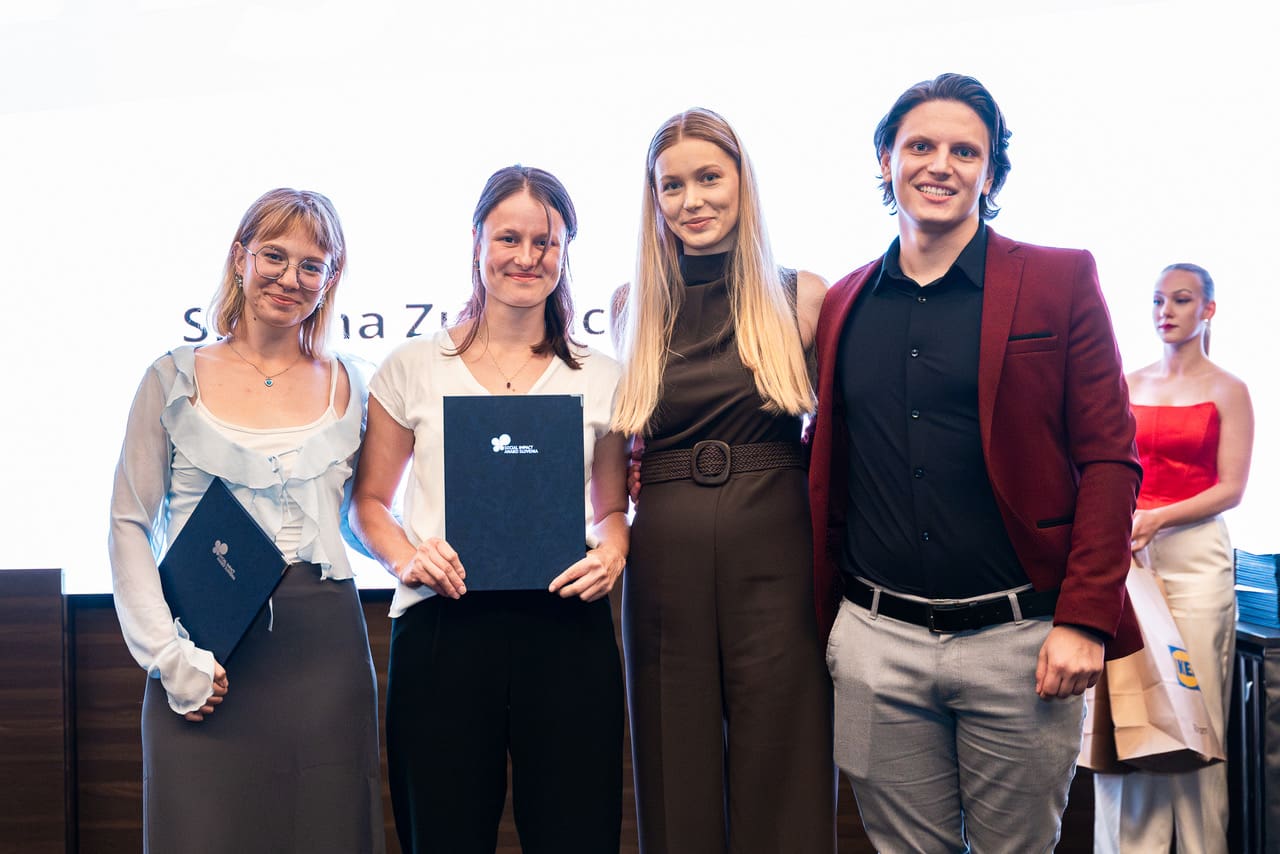
‘As researchers, we don’t communicate enough,’ they say. In the humanities, the gap seemed particularly obvious. So how do you bring research about society, culture and questions that ultimately concern all of us closer to people outside academia?
Their first idea was a podcast.
Finding a name proved slightly more difficult. One suggestion was even Kolektivna čik pavza — roughly, The Collective Cigarette Break— but that was quickly crossed off the list. Five minutes was not really the point, and they did not particularly want to promote smoking either. In the end, they landed on Moj sosed skos filozofira — My Neighbour Is Always Philosophising.. Everyday enough, slightly tongue-in-cheek and a long way from the title of an academic paper.
The podcast became the first project of Agora,a science communication production house they hope to develop further. Today, the team also includes Matej Mali, who, like Simona and Dagmar, holds a master’s degree in Social and Cultural Anthropology from the University of Ljubljana.
They are still learning as they make the podcast. Above all, they have learnt that there is no single formula for good science communication. Sometimes they start with a topic they feel deserves a wider audience and then look for the right researcher to talk to. Other times, it is the other way round: they come across someone doing interesting research and look for a way to make their work accessible to someone who knows almost nothing about the subject.
Every topic and every guest calls for a slightly different approach. They are constantly trying to strike a balance between presenting research accurately and rigorously, while making it possible for someone outside the field to follow along. It helps that they are researchers themselves. They share an understanding of the research process and its language with their guests, creating more trust and more room for conversation without having to strip away the complexity of the research simply to make it accessible.
‘And then you publish an episode and realise the audience is a whole story of its own.’
An episode the team is particularly excited about can end up being one of the least listened to. A topic they feel has been discussed a hundred times before can suddenly generate a huge response. Algorithms play their part too. More polarising topics tend to travel further, reactions on TikTok can be completely different from those elsewhere, and having a good instinct for an interesting topic does not necessarily translate into strong reach.
That is also why Agora is no longer quite the same idea it was at the beginning.
At the time, Simona and Dagmar mainly knew one thing: this was something they wanted to do. Questions about the team, funding, and how to turn an idea into something sustainable came a little later. They looked for some of those answers through the Social Impact Award Slovenia programme, where Agora received the Jury Award in 2025, before continuing their journey through the Impact Launchpad programme.
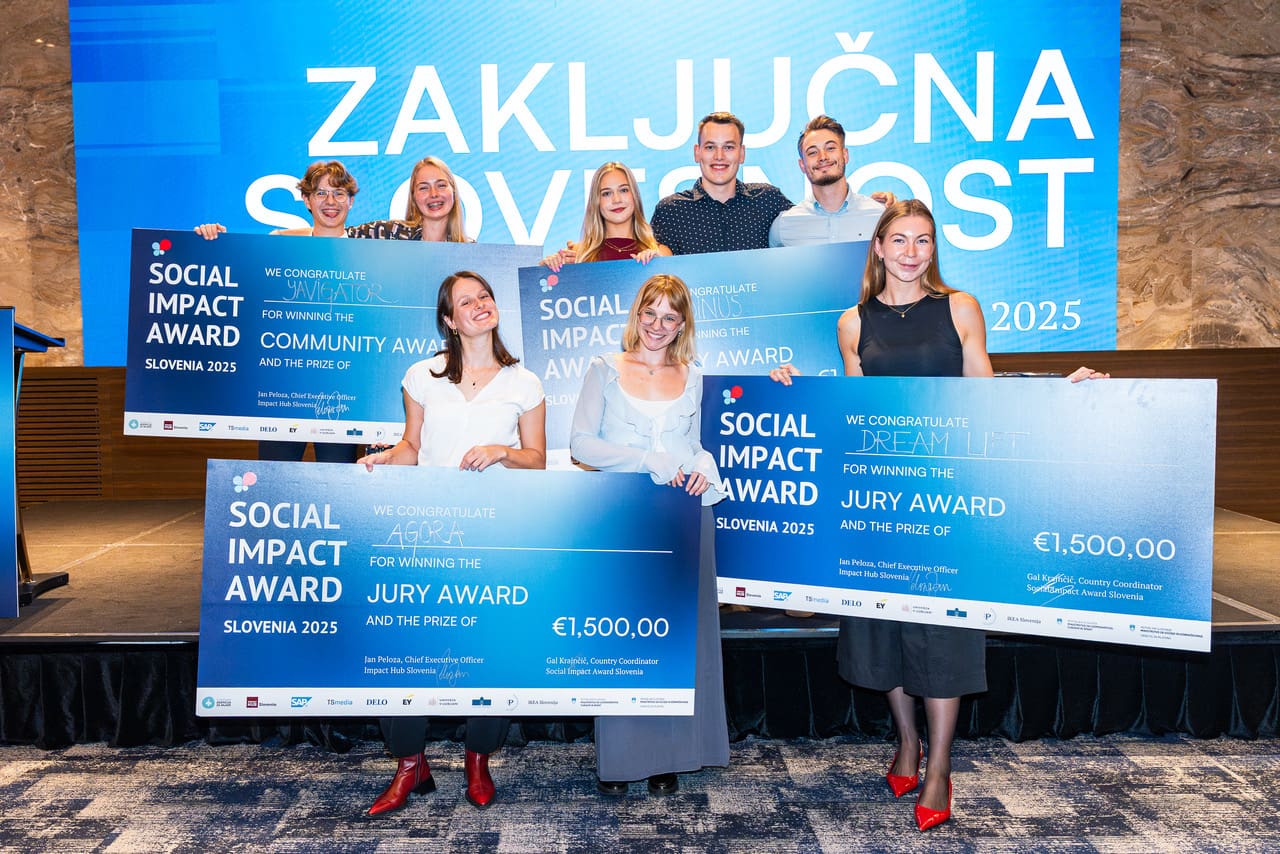
‘SIA was that moment of: just do it. It doesn’t have to be perfect. ’
And they did. Along the way, they also realised that what matters most is consistency, continually trying new things and accepting that not everything will work the first time.
Agora is now gradually moving beyond the podcast. With support from the University of Ljubljana’s HUD Fund, the team is developing an ethnographic film and exploring how science can also be communicated through images. They want to work with more researchers and research groups and experiment with a wider range of formats.
Behind it all remains a simple ambition: for the humanities not to spend most of their time talking to themselves.
For more people to understand what humanities researchers actually do and why their work matters. For their voices to be heard more often in public debate. And for someone who usually catches up on the news somewhere between TikTok or Instagram videos to occasionally come across Moj sosed skos filozofira and stay for a few more minutes.
And perhaps do a little philosophising themselves.